Learner Characteristics: Considered by IBAL Interactive Books
Educational Standards for IBAL Interactive Books
Learner Characteristics:
IBAL interactive books take into account the characteristics of the target students, including:
- Individual differences.
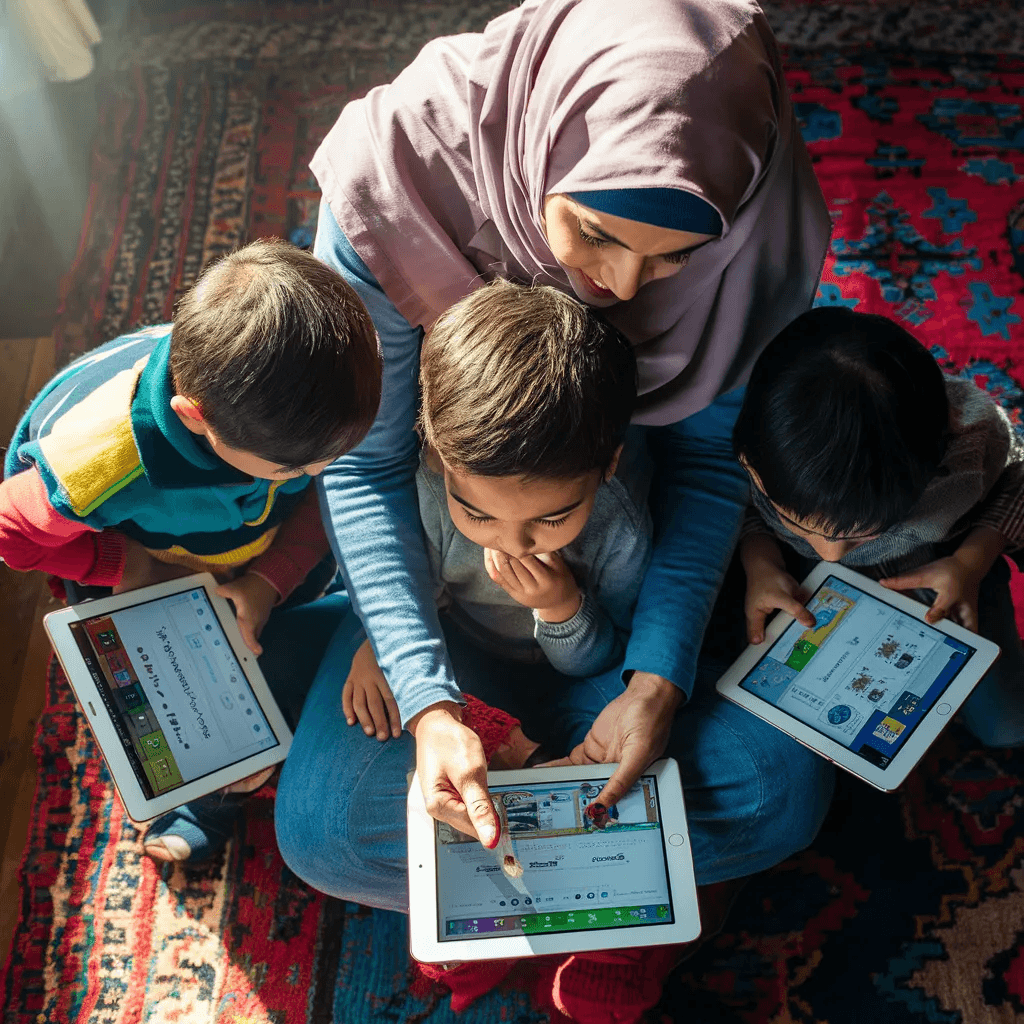
- Use of modern devices and technologies.
- Access to enriched information and connecting learning to real-life experiences.
- Providing remedial plans for learners who struggle with specific topics.
Interactive Learning Objectives:
- The objectives of IBAL interactive books are clearly and precisely formulated.
- They align with the educational objectives specified in the school textbooks.
- They promote the development of students’ scientific thinking skills.
Educational Content:
IBAL interactive books ensure that the content is:
- Appropriate to the skills and experiences of the student.
- Comprehensive, covering the curriculum topics and aligned with objectives.
- Supported with suitable media.
- Attractive and engaging.
- Written in short, easy-to-understand sentences.
- Gradually structured from easy to difficult.
- Designed to develop learner skills.
- Easy to navigate between content sections.
- Continuously reviewed to ensure accuracy of information.
Educational Activities:
IBAL interactive books ensure that activities are:
- Diverse in scope, covering cognitive, emotional, and skill-based domains.
- Varied in format: objective, essay, practical, and applied activities to stimulate student attention and motivation, while considering individual differences.
Educational Games:
IBAL interactive books ensure that games are:
- Diverse in scope, covering cognitive, emotional, and skill-based domains.
- Exciting and engaging, developing learners’ readiness to acquire new skills.
- Aligned with the educational concepts of the lesson.
- Appropriate to the student’s age, academic level, cognitive ability, and psychological characteristics.
- Helping children develop social skills, decision-making, and problem-solving.
- Reducing excess energy, stress, and harmful emotions.
- Supporting the holistic development of the child’s social, academic, cognitive, and emotional functions.
- Helping the child understand themselves, accept others, and explore their environment.
- Facilitating understanding of educational concepts in the curriculum.
- Providing enjoyment and delight.
- Reinforcing prior knowledge and improving comprehension.
Feedback:
IBAL interactive books ensure that feedback is:
- Immediate and varied (interactive, auditory, or written).
- Appropriate for the learner’s age group.
Standards for Educational Learning Resources:
Educational resources are designed based on quality educational standards, including:
- Alignment of resources with the cognitive and skill-based objectives of the curriculum.
- Considering lower and higher cognitive levels: knowledge, comprehension, application, analysis, synthesis, and evaluation.
- Ensuring educational resources are free from scientific or linguistic errors.
- Meeting technical standards for educational videos and explanations: clarity, ease of control, age appropriateness, duration, and synchronization of voice-over with visuals.
- Ensuring technical standards for voice narration: clarity, volume, varied intonation, absence of verbal or linguistic errors, ease of control, synchronization with text or images, and suitability for the student’s age.